
Agricultural & Biosystems Engineering
The programme develops knowledge and skills in agricultural engineering, biosystems technology, farm machinery, irrigation, processing and related engineering systems for sustainable agricultural production.
We are the oldest Faculty in the University of Eswatini, having been established in 1966. Over the years, we have built a strong teaching and research culture that continues to contribute to the development of agriculture and the nation.
We have our own peer research journal and are home to more than 1,500 students, making us one of the largest faculties in the University.
Discover Our Faculty →
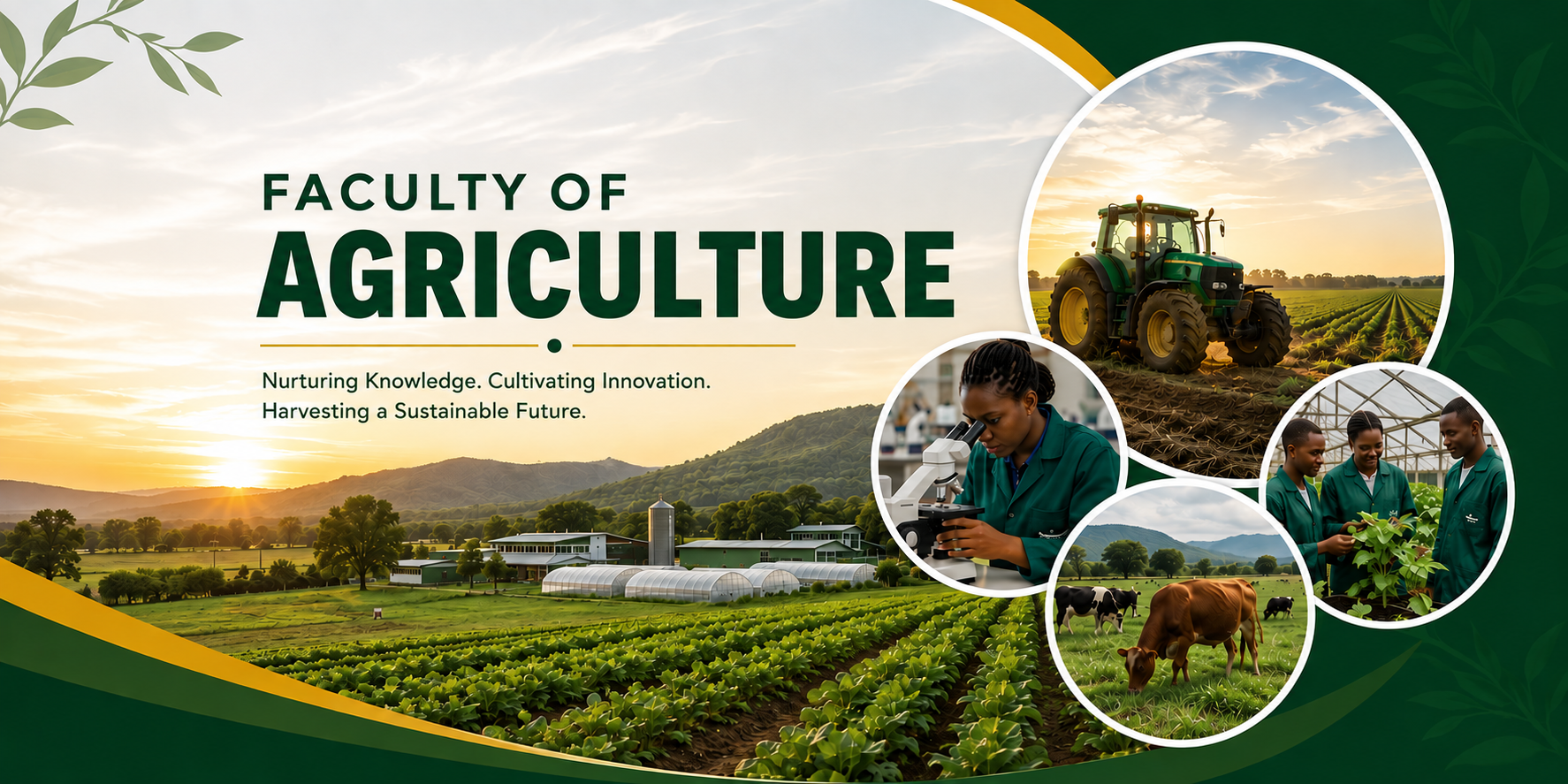
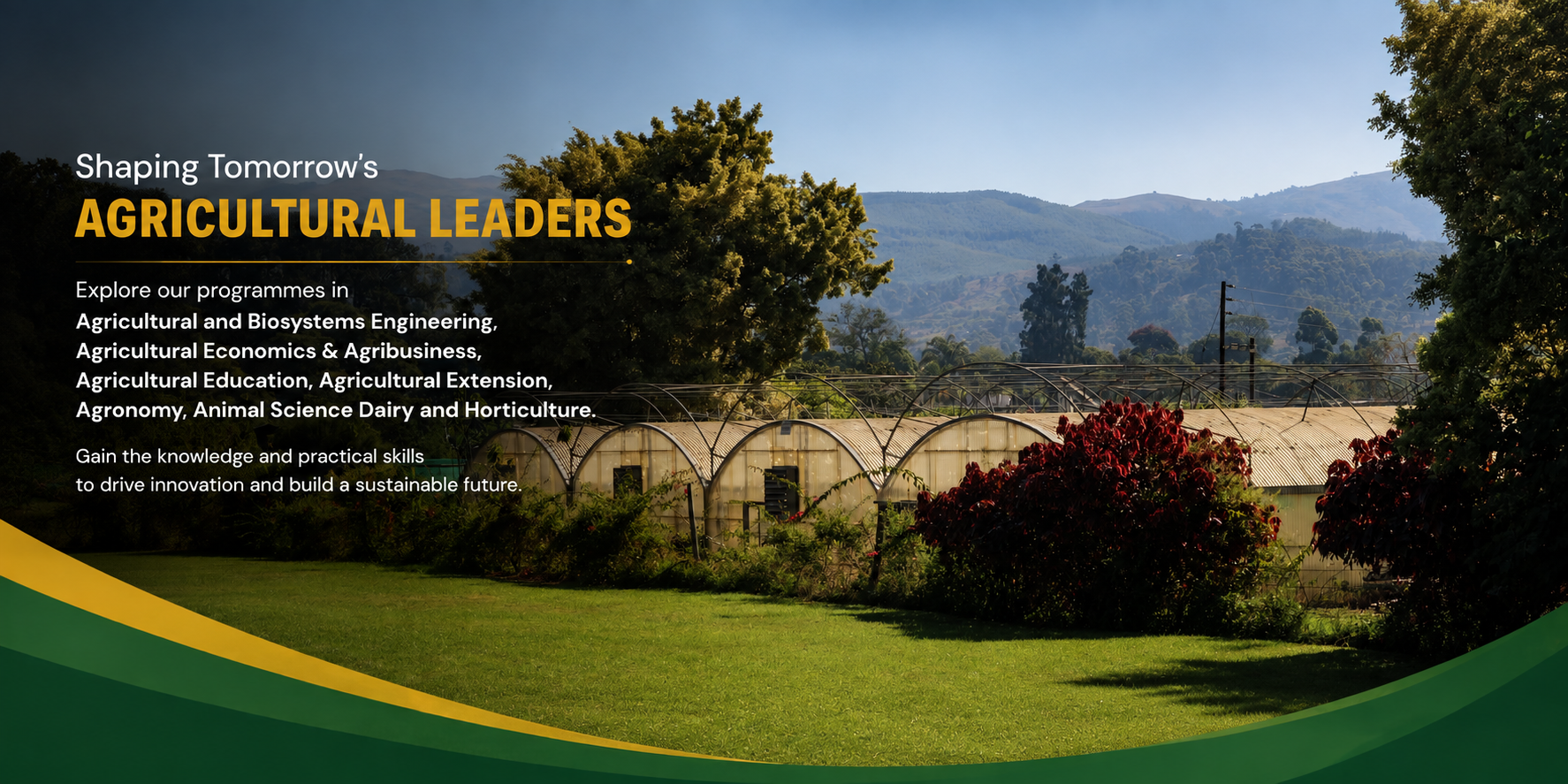
Our Faculty lies within the fertile land of the Malkerns Valley, providing an ideal environment for teaching, learning, research and practical agricultural training.
Our teaching farm provides staff and students with the necessary practical skills and creates opportunities for research across most agricultural fields. Students also undertake their entrepreneurial projects on the farm.
Through the Institute of Post Graduate Studies (IPGS), the Faculty offers several Master's programmes, PhDs by coursework and PhDs by research.
From practical learning on the farm to advanced research and postgraduate study, the Faculty continues to prepare graduates to make a meaningful contribution to agriculture and society.
Discover our diverse range of programmes designed to develop practical skills, professional knowledge and innovative thinking for the future of agriculture and related industries.
The programme develops knowledge and skills in agricultural engineering, biosystems technology, farm machinery, irrigation, processing and related engineering systems for sustainable agricultural production.
This programme combines agricultural economics, agribusiness and management to develop students' understanding of markets, resources, enterprises and economic decision-making in agriculture.
The programme prepares graduates for careers in agricultural education, equipping them with the knowledge, practical skills and professional competencies required for teaching and training.
The programme develops communication, facilitation and professional skills required to work with farmers, communities and organisations in advancing agricultural development.
Agronomy develops expertise in crop science, soil management, plant production and sustainable farming systems to improve productivity, food security and agricultural resilience.
The Animal Science programme focuses on animal production, nutrition, breeding, health and management, providing students with scientific and practical foundations for livestock production.
Develop specialised knowledge and practical skills in dairy production, nutrition, breeding, herd management and sustainable dairy enterprise development.
Horticulture covers the science and production of vegetables, fruits, flowers and other horticultural crops, with emphasis on sustainable production, management and post-harvest practices.
We combine academic knowledge, practical experience, research, innovation and entrepreneurship to prepare graduates for meaningful contribution to agriculture, industry and sustainable development.
We provide agricultural education designed to develop graduates with the knowledge and skills needed to contribute to the needs of the nation and beyond.
Our programmes incorporate supervised field attachment and practical experiences that connect students with organisations and the real world.
Practical courses, supervised training, research projects and applied learning help students develop capabilities that extend beyond theoretical knowledge.
Our programmes encourage students to engage with issues of sustainable development and the relationship between agriculture, people and the planet.
Entrepreneurship and applied entrepreneurship courses help students develop opportunities beyond conventional employment and encourage innovative thinking.
Students undertake research projects and develop professional capabilities that support agriculture, agribusiness, extension and wider community development.
Preparing graduates through education, practical experience, research and innovation for the future of agriculture.